
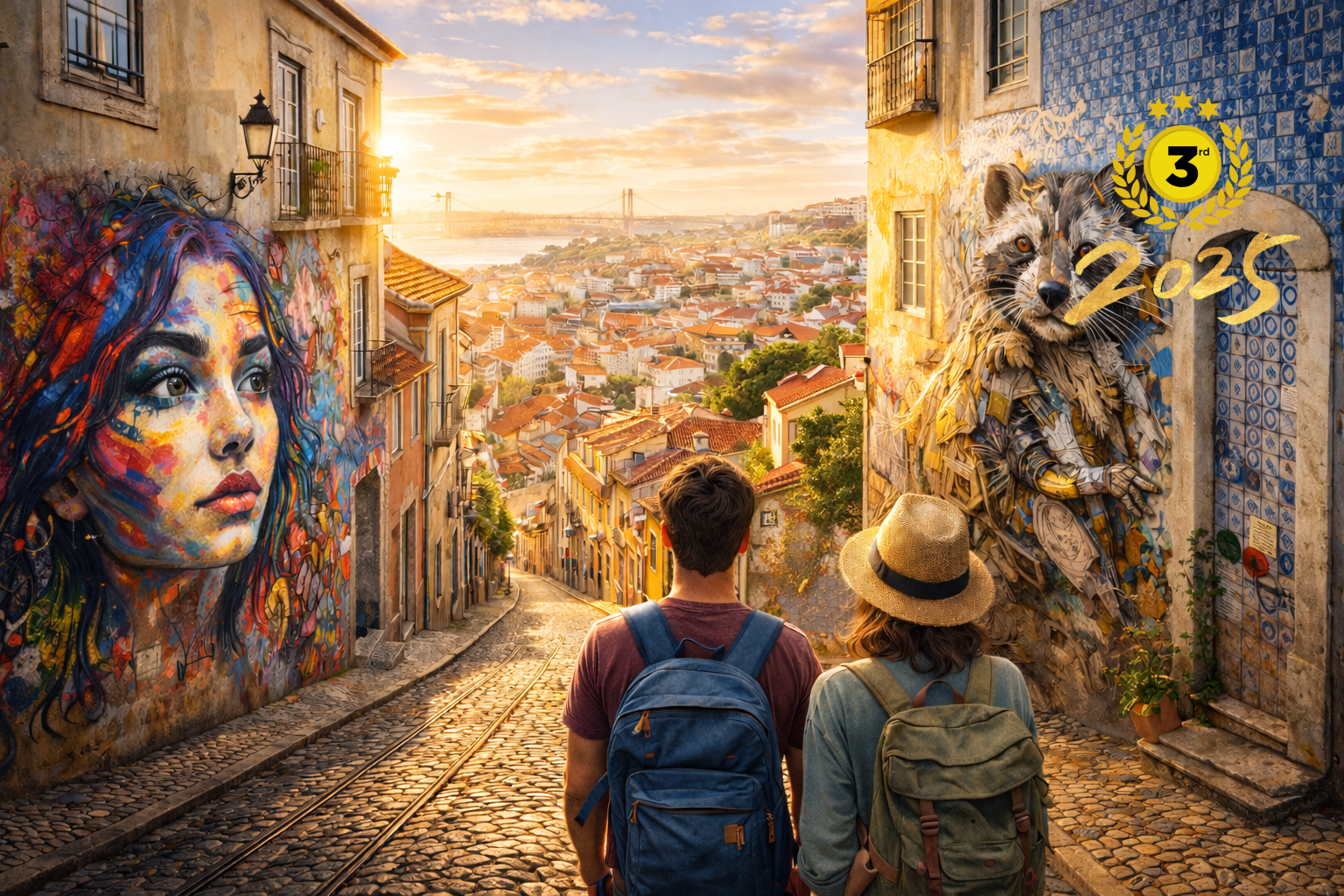
Lisbon confirmed its place among the world’s major urban-art cities in the Street Art Cities Awards 2025.
It ranked third for street art, behind Madrid and Athens and ahead of Berlin, London, New York and Paris.
More than 1,060 works were mapped across Lisbon, Almada and Oeiras when this guide was compiled. That count can change as the map grows.
What makes Lisbon’s street art distinctive is how murals meet the city’s heritage, architecture and everyday identity.
Why street art in Lisbon is distinctive
Urban art is woven into the city rather than kept in a separate zone.
Murals sit beside:
- traditional azulejos
- colourful façades
- Portuguese stone pavements
- viewpoints
- historic architecture
Within a few streets you may move from an 18th-century wall to a contemporary large-scale mural.
The result is a living urban gallery.
Save to My OSL
Choose the districts to explore
Save each area separately in My OSL, then combine the stops into a route that suits your time and transport.
Routes by district
Street-art route
Marvila and Beato
Former industrial areas now host large murals, artist studios and cultural projects.
Street-art route
Alcântara and LX Factory
An area combining urban art, design, restaurants and galleries.
Street-art route
Mouraria and Graça
Murals appear among the older streets and viewpoints of the historic centre.
Lisbon on the world street-art podium
The 2025 Street Art Cities Awards ranked these cities first:
- Madrid
- Athens
- Lisbon
Lisbon placed ahead of:
- Berlin (7th)
- London (8th)
- New York (10th)
- Paris (13th)
That result put Lisbon among the internationally recognised centres of the movement.
The ranking reflects the visibility of work across the city.
More than 1,060 works mapped
More than 1,060 works were mapped by Street Art Cities across Lisbon, Almada and Oeiras when this guide was compiled.
The map is a changing record rather than a fixed total.
Examples include:
- Skate Park do Lumiar
- Muro dos Oceanos
- Village Underground Lisboa
Urban art extends well beyond the districts most visitors first see.
Portuguese murals in the international spotlight
Other Portuguese artists recognised in the awards included:
- Helen Bur
- Nuno Palhas
The recognition reaches beyond one city and reflects the wider Portuguese scene.
A local view: an even richer scene
Rankings capture only part of the picture. Projects such as Festival MURO have invited international artists to create new murals in different Lisbon districts.
New works and collaborations keep changing the routes.
A street-art walk should respond to what is actually visible when you visit.
Street artists to know in Lisbon
- Vhils — portraits carved into walls
- Bordalo II — large animals made with reused materials
- Add Fuel — contemporary interpretations of azulejos
These artists have helped bring Lisbon’s urban-art scene to an international audience.
A changing city: why each visit is different
New projects, murals and neighbourhoods change the map over time.
A route from two years ago may miss works that matter today.
Leave room for discoveries as well as the pieces you have chosen in advance.
Lisbon street art in 2026: events and projects
Festivals also shape the city’s street-art landscape.
Festival Iminente — September 2026
Founded by Vhils, Festival Iminente brings together several forms of urban culture. Its 2026 edition took place from 17 to 20 September at the former Escola Industrial Afonso Domingues in Marvila.
The programme brought together art, installations, performance, music, dance, skate, discussion and food.
The dates are historical; check the organiser for a future edition.
Festival MURO — new murals over time
Organised by the city of Lisbon, Festival MURO has invited international artists to make large murals in different districts. Works from the project help explain why the city’s street-art map keeps changing.
Why explore Lisbon’s street art
An outing for different groups
Street-art routes can appeal to:
- families looking for a visual activity with children
- groups of friends
- stag and hen groups
- travellers wanting a less conventional visit
They offer a different rhythm from a traditional historical tour.
Without some planning, however, it is easy to miss works spread across the city.
How much time should you allow?
- 1 hour — a short introduction to major pieces
- 3 hours on foot — a more substantial discovery
- half a day — a fuller immersion
- a full day — an east-to-west route across the city
All year, including winter
Street art can be explored throughout the year. In rain, a route can include stops inside venues linked to the art scene.
Ways to visit
- on foot — spend time within historic districts
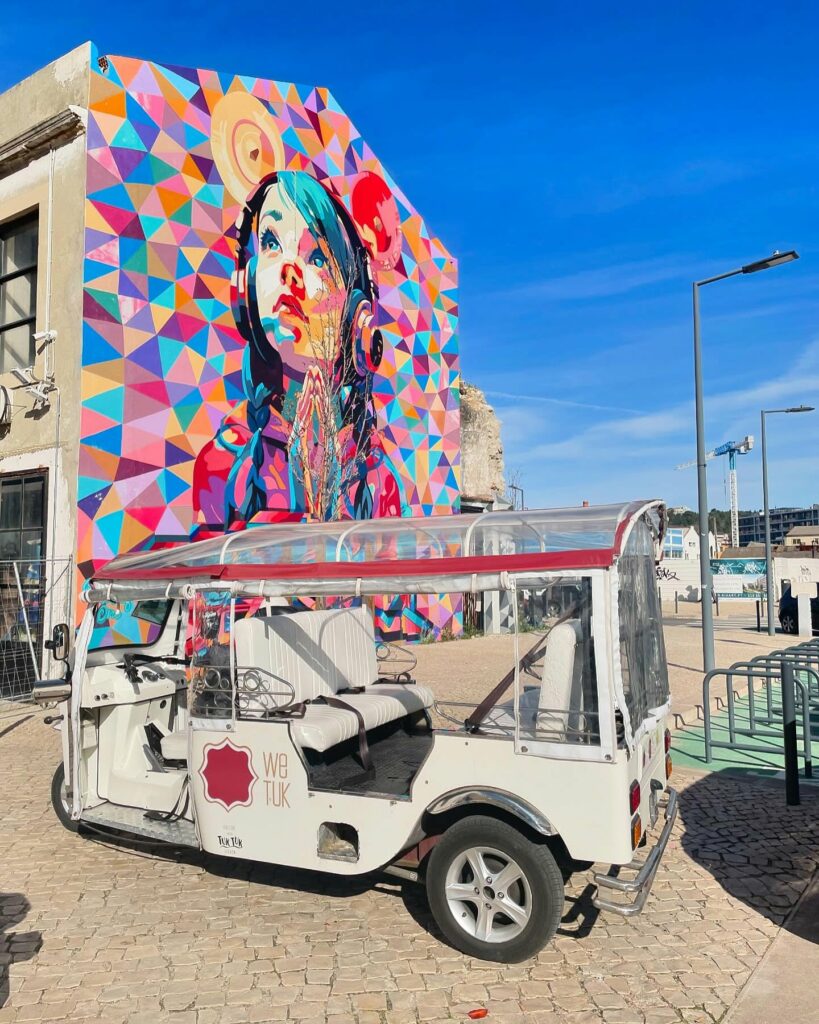
- by tuk-tuk — connect more distant pieces
- by sidecar — take a different route beyond the usual visitor circuit
Routes can start in the centre or be adjusted around where visitors are staying.
Combine street art, the historic centre and food
A route may include:
- historic-centre stops
- local food tastings
- selected street-art addresses
This can bring several sides of Lisbon into one coherent outing.
Booking a street-art visit
For a particular time slot, aim to book about three weeks ahead. Last-minute space may sometimes be available; confirm the actual options for your dates.
When your stay dates are set, choose a route that fits the rest of your programme.
Languages available
FR · EN · PT · ES · IT — confirm the language for the guide and date you choose.
FAQ — street art in Lisbon
Where should you look? Marvila, Beato, LX Factory, Mouraria, Graça and Bairro Padre Cruz are among the areas to explore.
Is Lisbon a street-art city in 2026?
Yes. Lisbon placed third in the 2025 Street Art Cities city ranking, and new works and projects continue to change the scene.
How many works can you see?
More than 1,060 works were mapped across the Lisbon area when this guide was compiled. Check the live count because new pieces are added.
Can you explore without a guide?
Yes, but the works are spread out. A planned route can save journeys and help you find the pieces that matter most to you.
How long does a street-art route take?
A first look can take a few hours. A route linking the main artistic districts can fill much of a day.
Do street-art tours suit families?
They can. Large murals are engaging for children, provided the route and transport suit the group.
Can street art be combined with the historic centre?
Yes. Routes can combine older districts, major murals and food stops.