
Partner article
When we think of Portuguese azulejos, we often picture Lisbon’s façades, Sintra’s palaces or historic panels that tell centuries of stories.
Yet some artists choose a different path.
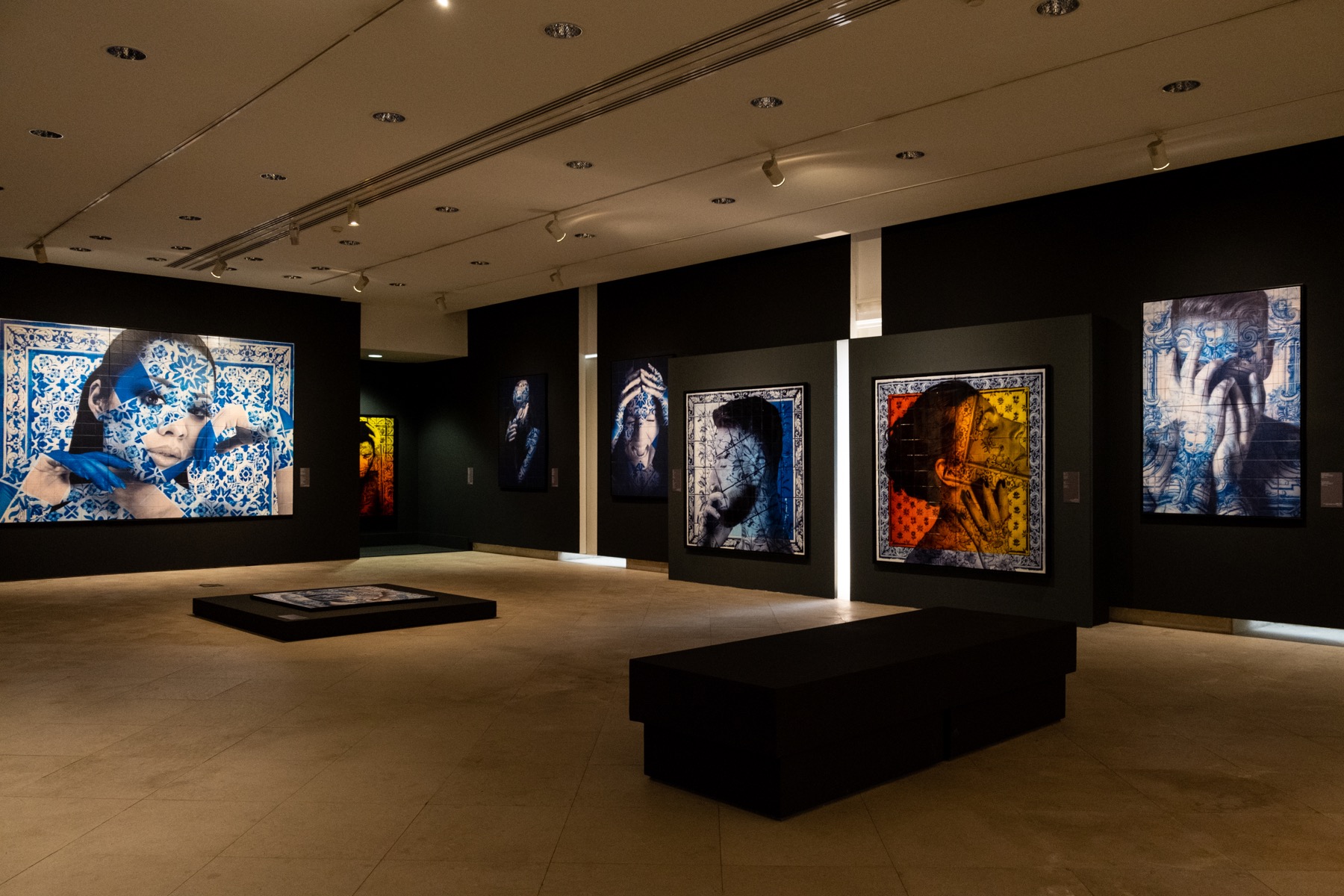
For more than fifteen years, Bastien Tomasini, known as O Gringo, has explored this world in his own way. Instead of reproducing traditional tilework, he uses its visual language to create contemporary art in which portraits, emotions and artistic expression meet.
That approach led him to Lisbon’s National Tile Museum in 2022 with the exhibition Esperança Além do Horizonte. His work then travelled across Portugal and on to Paris, Miami and several US cities.
His art remains deeply connected to one of the most recognisable symbols of Portuguese culture.
Who is O Gringo?

Born in Nice in 1988, Bastien Tomasini discovered the world of imagery, travel and Mediterranean cultures at an early age. It was in Portugal, however, that he gradually found the material that would shape much of his artistic work.
Over the years, he became interested in the history of azulejos, their origins and influences, and their place in Portuguese cultural identity. Arab heritage in the Iberian Peninsula, Chinese porcelain, European decorative traditions and the symbolic importance of blue are among the references that inform his thinking.
Rather than reproducing traditional techniques, O Gringo chose to explore this heritage from a contemporary perspective.
His work creates a dialogue between memory and modernity, using the azulejo as the starting point for a wider exploration of the gaze, emotion, identity and the passing on of culture.
Through this approach, he has developed an immediately recognisable visual world that has become the signature of his work.
When the azulejo becomes a contemporary language
At first glance, O Gringo’s works often make an impression through their scale and visual impact.
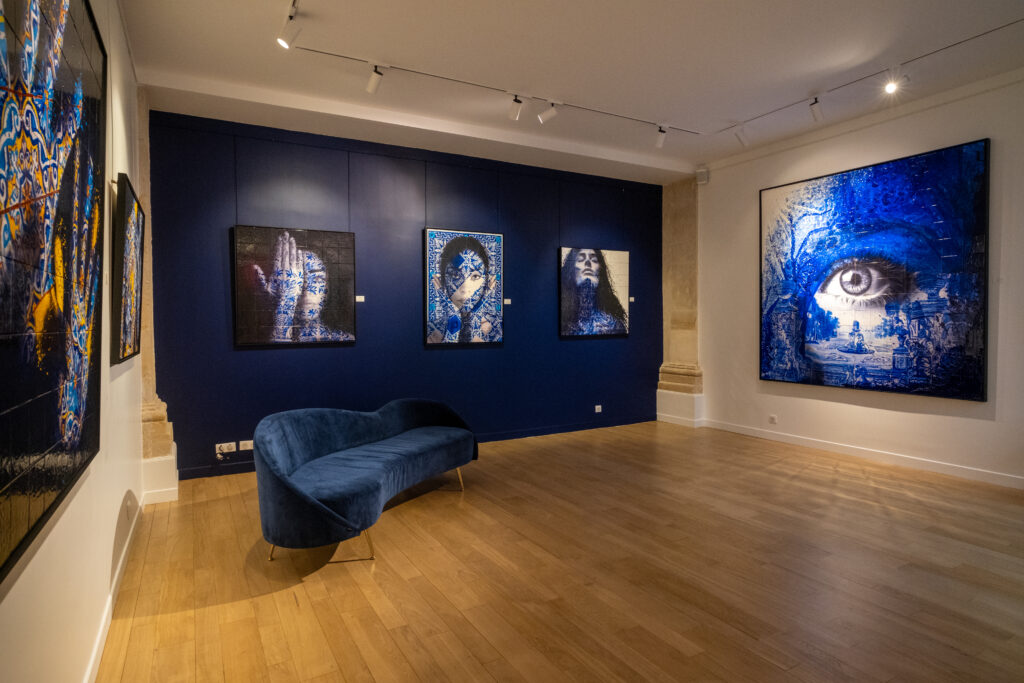
Monumental faces, intense gazes, fragmented compositions and figures that seem to emerge from thousands of azulejo fragments: his visual world draws you in immediately.
But there is a deeper line of thought behind the imagery.
In his work, the azulejo is not merely a decorative element. It becomes a narrative material, a visual language for exploring universal themes such as memory, identity, emotion and the relationship between people and their cultural heritage.
To bring this world to life, the artist combines a range of techniques and materials: photography, fine art printing, painting, sculpture, ceramics, wood, resin and 3D printing.
The result is a hybrid body of work that crosses disciplines, with Portuguese heritage in constant conversation with contemporary art.
The exhibition that marked a turning point
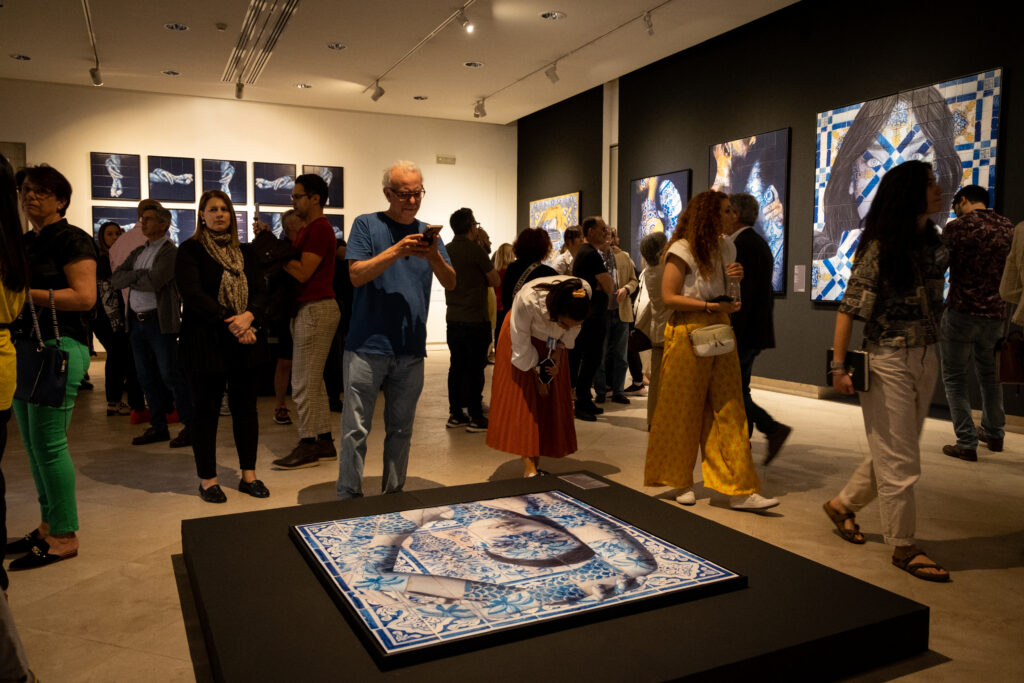
In June 2022, O Gringo reached one of the most significant milestones of his career with the opening of Esperança Além do Horizonte at Lisbon’s National Tile Museum.
The exhibition was presented at the invitation of Alexandre Pais, then director of the museum, under the artistic direction of Dora Fernandes.
For around six months, his works occupied the museum’s main entrance gallery, a space specially adapted for the project.
For many visitors, the encounter began as soon as they entered the building. Large portraits in shades of blue entered into dialogue with one of Portugal’s most important places devoted to the history of tilework.
For O Gringo, the exhibition also held symbolic significance.
After more than fifteen years spent studying, observing and reinterpreting the visual world of azulejos, presenting a solo project in the institution dedicated to this art form took on a particular meaning.
But Esperança Além do Horizonte was more than a conventional exhibition.
The project included guided visits with the artist, cultural outreach activities and a workshop with members of CERCIMA, an organisation O Gringo has supported for several years.
It brought an artistic, cultural and human dimension to the project.
When fado meets O Gringo’s art
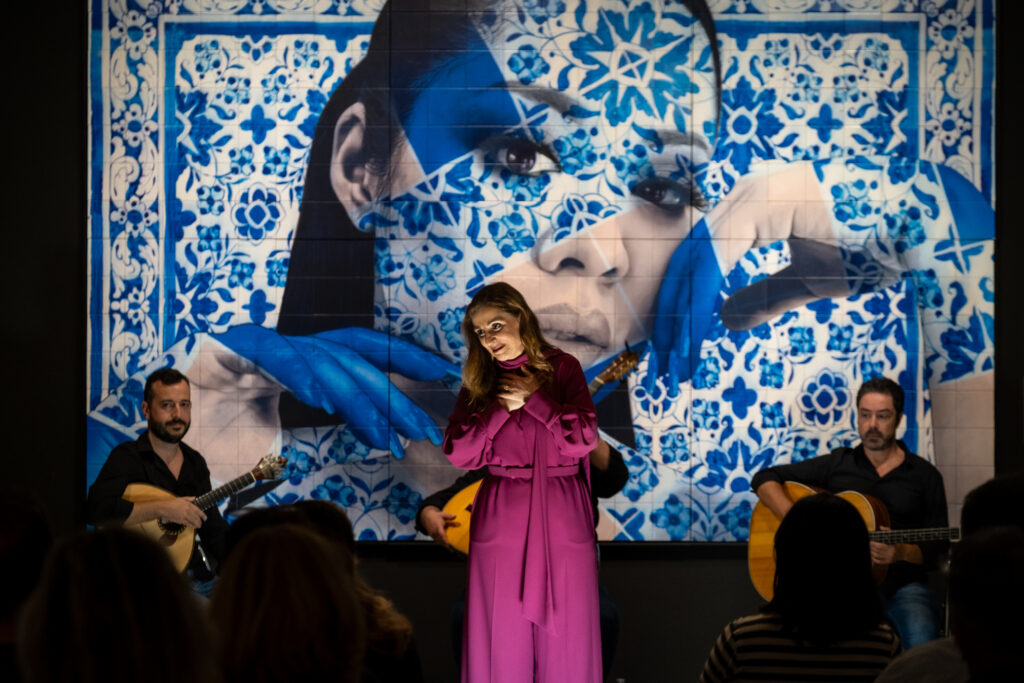
One of the exhibition’s most memorable moments involved fado singer Kátia Guerreiro.
A leading figure in contemporary Portuguese fado, she became one of the faces of the project, posing for several works shown in the exhibition.
Her portraits, reinterpreted through O Gringo’s visual language, are among the most striking images from Esperança Além do Horizonte.
The collaboration culminated in a closing concert held at the National Tile Museum itself.
Surrounded by the exhibited works, Kátia Guerreiro performed several songs in an unusual setting, bringing together two art forms deeply connected to Portuguese culture: fado and the azulejo.
Photographs from that evening remain among the most memorable records of the exhibition.
From Portugal to Paris and Miami
What began on the streets of Lisbon went on to resonate far beyond Portugal.
In the years that followed, O Gringo’s work continued to develop both in Portugal and internationally.
One of his most significant projects was a solo exhibition of almost 300 square metres, organised as part of the launch of the Aveiro and Ovar Capital of Culture programme. It gave the artist the opportunity to present his visual world on an ambitious scale.
His work then crossed Portugal’s borders.
In Paris, the exhibition Émotions, presented at Place des Vosges, attracted attention in the French art world. The opening speech was given by João Pedro Monteiro, then director of the National Tile Museum, who travelled from Lisbon for the occasion.
Some years later, works by O Gringo were also shown in Miami during Art Basel week, a major date on the international contemporary art calendar.
His journey has also taken him to exhibitions in several US cities, including Los Angeles, Las Vegas and San Francisco, as well as venues elsewhere in Europe.
This development shows how his work can cross cultural borders while retaining a strong connection to Portugal.
Azulejo Vivo: a book that takes the story further
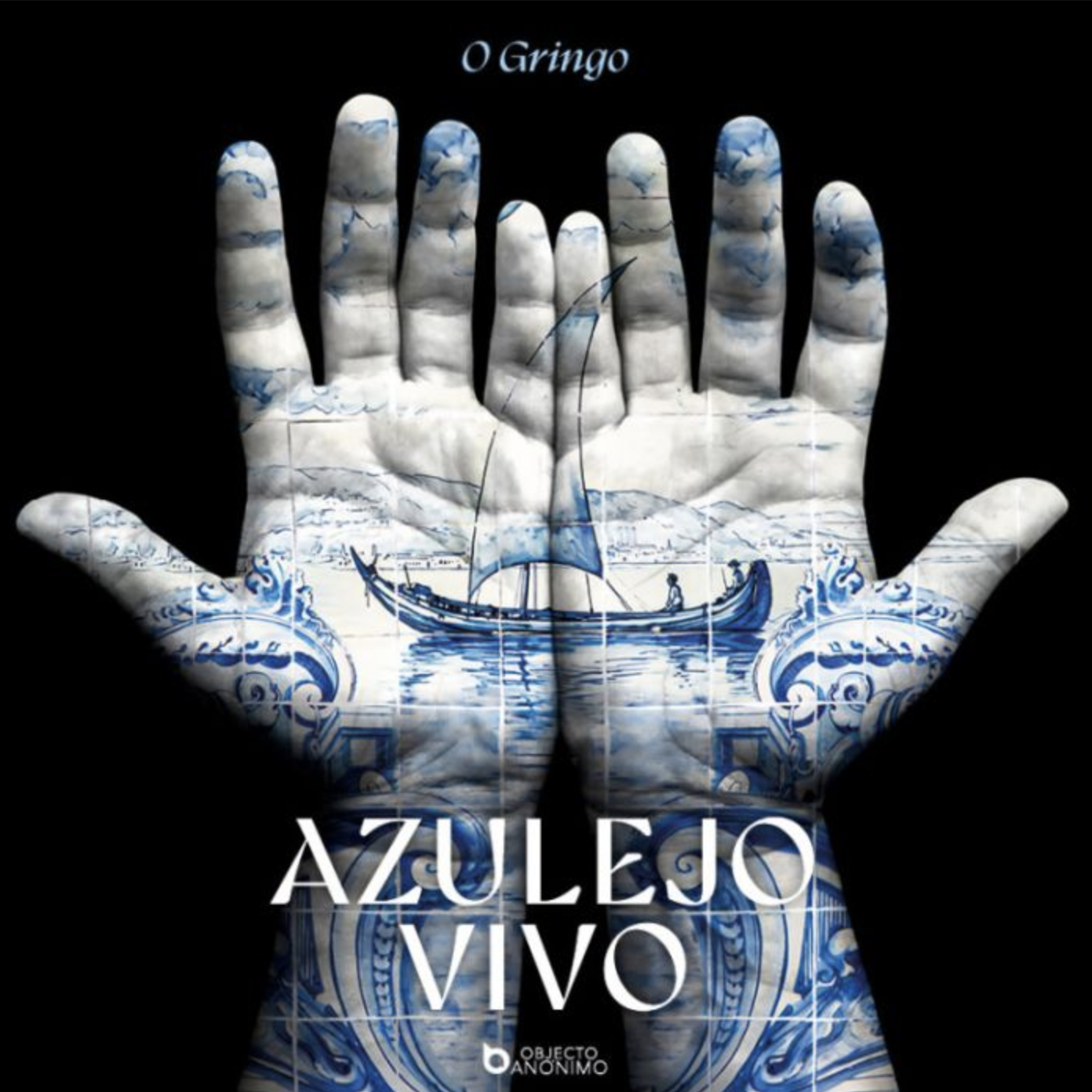
Alongside his exhibitions, O Gringo wanted to share some of his research and perspective on azulejos through the book Azulejo Vivo.
The book draws on several years of artistic exploration of this heritage and offers a view of how his work and its main inspirations have evolved.
It adds another dimension to a career already marked by exhibitions and cultural collaborations.
Where can you discover O Gringo’s work in Lisbon?
Lisbon holds a special place in O Gringo’s journey.
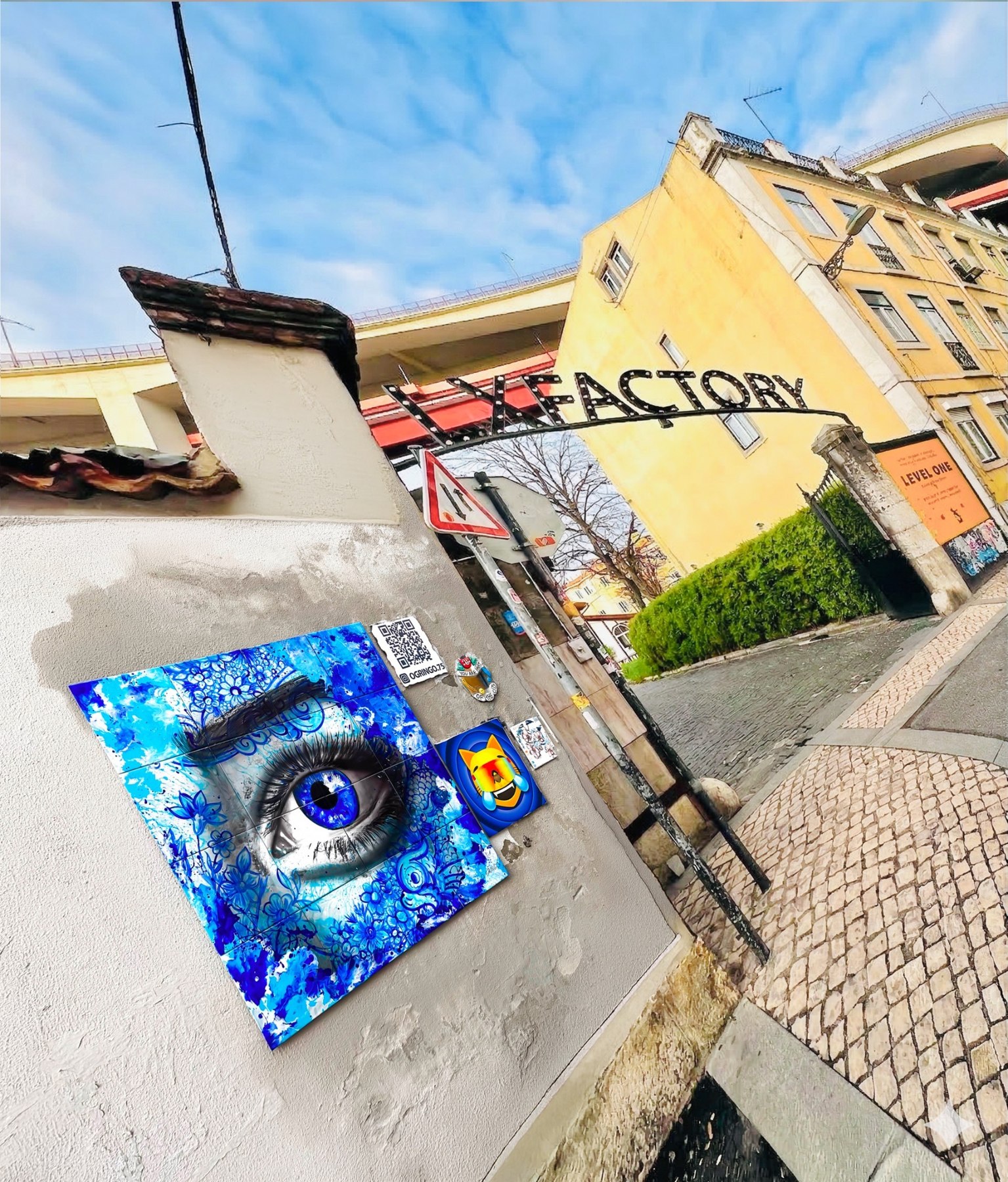
Long before his exhibition at the National Tile Museum, many residents and visitors first came across his work on the streets of the capital.
Over the years, several of his works have appeared in public spaces, bringing his visual world to audiences beyond galleries and cultural institutions.
Check the artist’s information and La Smart Galerie at LX Factory to find out which works and exhibitions you can visit during your stay.
On 22 October 2026, O Gringo led an azulejo painting workshop with CERCIMA participants at La Smart Galerie in LX Factory. It was part of a day of two workshops organised by Paris 75 Image in support of Casa do Moinho. Official report, published on 23 October 2026.
Art that stays with you
What often surprises people when they first encounter O Gringo’s work is not necessarily the reference to the azulejo.
It is the eyes.
The faces seem to look back at you before you begin to notice the details of the composition. Gradually, the fragments, shades of blue and many references connecting the work to Portuguese visual culture come into view.
This layered reading is part of the strength of his work. From a distance, the image catches your attention. Up close, it reveals details that invite you to take your time.
Perhaps that is why his work can reach both contemporary art enthusiasts and people drawn more simply to the beauty and history of azulejos.
A journey worth following
Between street art, galleries and temporary exhibitions, Lisbon remains an important place to discover O Gringo’s work.
Since his exhibition at the National Tile Museum, the artist has continued to broaden his horizons. His work has travelled to Paris, Aveiro, Miami, Los Angeles and San Francisco while maintaining its connection to Portugal.
Despite this international recognition, his visual world remains rooted in the azulejo: not as a decorative object or a simple tourist symbol, but as a language for telling stories, conveying emotions and building bridges between past and present.
Perhaps that is what makes his path so distinctive. While many see the azulejo as a legacy of the past, O Gringo continues to use it as a living material that keeps evolving.
When we encounter his work today, whether on a Lisbon street, in a gallery or at an exhibition, we quickly see that it is about more than azulejos. Above all, it is a way of looking at people.
Instagram: @ogringo.75
Official website: O Gringo